Cold Saw Blades in the Era of Industry 5.0: Precision Cutting for Smart Manufacturing
Explore how cold saw blade technology supports precision cutting, smart manufacturing, productivity, and modern metal-processing requirements.
Read More
A high-quality cold saw blade should deliver precise, stable, and repeatable cutting performance when matched with the right material, machine, and operating conditions. Yet many manufacturers still encounter premature tooth chipping, rapid edge wear, excessive burrs, poor cut quality, or blade failure long before the expected service life is reached.
In many cases, the blade itself is not the only problem. Material characteristics, blade selection, machine condition, cutting parameters, chip control, lubrication, and maintenance practices can all contribute to premature failure.
For manufacturers performing repetitive cutting of carbon steel, alloy steel, stainless steel, pipe, tube, or forging billets, the real objective is not simply to make one blade last as long as possible. It is to achieve consistent cutting quality, predictable tool life, fewer unplanned stoppages, and a lower cost per cut.
Samurai Saw Works Co., Ltd. is a Taiwan-based manufacturer of industrial cold saw blades. Its main product range includes the SR-8 for solid carbon and alloy steel, the SR-8S for SUS stainless steel, and the SR-8P for pipe-cutting applications.
When a steel cutting saw blade fails earlier than expected, a common first reaction is:
“Is there something wrong with the blade?”
Sometimes there may be a problem with the blade itself. However, in industrial metal cutting, blade performance depends on the entire cutting system.
Important factors include:
For example, a blade designed for solid steel bar faces a different cutting load when applied to thin-wall pipe or tube, where each tooth repeatedly enters and exits the material. Likewise, stainless steel creates different cutting conditions from conventional carbon steel and may require a different blade design, cutting parameters, and lubrication strategy.
Even when the correct blade has been selected, unstable clamping, machine vibration, excessive feed, or poor chip evacuation can still result in premature tooth damage.
Therefore, instead of asking only:
“Is this a good saw blade?”
A more useful question is:
“Is this the right blade for the material, workpiece shape, machine condition, and cutting parameters?”
The first two common causes of premature blade failure can occur before or at the very beginning of the cutting process: using the wrong blade and choosing an unsuitable tooth count or tooth geometry.
Carbon steel, alloy steel, stainless steel, solid bar, pipe, and tube do not create identical cutting conditions.
When cutting a solid steel bar, the blade teeth generally remain in relatively continuous contact with the material. When cutting pipe or tube, however, each tooth repeatedly goes through the following cycle:
Enter the material → leave the material → enter again
This interrupted cutting action creates different impact loads and may also increase the risk of vibration, tooth grabbing, burr formation, or uneven tooth loading.
Stainless steel presents another set of cutting challenges and requires careful consideration of tip material, tooth design, lubrication, and operating parameters.
Therefore, manufacturers searching for cold saw blades for steel should not ask only:
“Can this blade cut steel?”
They should also determine:
Samurai Saw addresses these different cutting requirements with dedicated blade designs for solid carbon and alloy steel, SUS stainless steel, and pipe applications. A detailed product-selection overview is provided later in this article.
More teeth are not always better, and fewer teeth do not automatically mean faster cutting.
What matters is:
How many teeth are engaged with the workpiece at one time, and how much load each tooth must carry.
If too few teeth are engaged, each tooth may be overloaded, increasing the risk of:
If too many teeth are engaged, the gullets may not have enough space to carry chips away effectively. This can lead to:
The appropriate tooth count should therefore be selected according to the workpiece diameter, solid or hollow geometry, wall thickness, material hardness, machine condition, and feed rate.
One of Samurai Saw's key strengths is that its technical background extends beyond blade manufacturing.
Within the broader group, JRS Special Steel Co., Ltd. handles solid-bar distribution and cutting services, while Samurai Saw Works focuses on new cold saw blades and professional resharpening. The Steel Cutting Department presented on the official website operates seven automatic circular sawing machines and ten band saw machines, providing practical experience with different steel-cutting applications.
This combination provides practical exposure to steel grades, workpiece dimensions, cutting conditions, blade wear, and cost-per-cut challenges—issues that industrial users face every day.
Such experience can help address practical questions including:
Rather than evaluating blade performance through specifications alone, Samurai Saw can draw on a broader understanding of special steel, practical cutting conditions, blade manufacturing, and resharpening when developing products and supporting industrial applications.
To explain what differentiates a professional metal cutting saw blade, broad claims such as “high quality,” “durable,” or “high efficiency” are not enough. Industrial users need to understand how the blade is designed and what cutting challenges those design features are intended to address.
The SR-8 Cermet Carbide-Tipped Cold Saw Blade is developed for solid carbon and alloy steel, including S45C and SCM415. Its key product features include Dragon Claw, Bevel Wing, and NANO cermet carbide tips.
During repetitive cutting, the joint between the cutting tips and saw body is repeatedly subjected to cutting forces and mechanical impact.
Samurai Saw describes its Dragon Claw design as a structure that reinforces the connection between the tips and saw body, supporting greater stability under repeated cutting loads.
Cutting friction affects heat generation, cutting resistance, and edge wear.
The Bevel Wing design is intended to reduce friction and contribute to longer cutting life. For steel processors, automotive-component manufacturers, forging companies, and other high-volume users, reduced blade wear can also help lower replacement frequency, downtime, and cost per cut.
The SR-8 uses NANO cermet carbide tips for cutting solid carbon and alloy steel.
According to long-term internal testing published by Samurai Saw, the SR-8 achieved more than a 30% improvement in cutting life compared with the earlier SR-1 series.
This is a manufacturer-reported internal test result, and actual blade life will still vary depending on material grade, hardness, workpiece dimensions, machine condition, tooth count, cutting speed, feed rate, lubrication, and chip evacuation. It should not be interpreted as a guaranteed improvement under every cutting condition.
Even the correct cold saw blade may fail prematurely if cutting speed, feed rate, workpiece clamping, or machine condition is unsuitable.
These are the third and fourth common causes of premature blade failure.
If the feed rate is too aggressive, each tooth may experience excessive loading, increasing the risk of tooth chipping or tip damage.
However, feeding too slowly is not necessarily safer.
If the feed per tooth is too low, the cutting edges may rub against the material instead of forming proper chips. This can increase heat and accelerate edge wear.
Similarly, excessive cutting speed may increase thermal load, while an excessively low speed can reduce productivity and prevent efficient chip formation.
Cutting parameters should therefore be adjusted according to:
This is especially important when switching from carbon steel to stainless steel or from solid bar to pipe or tube. The same settings should not automatically be used for every application.
When using a circular saw blade for metal-cutting applications, a stable and sufficiently rigid cutting environment is essential.
If the workpiece moves, rotates, or vibrates during cutting, the teeth cannot engage the material consistently and may be exposed to irregular impact loads.
Possible results include:
Before concluding that the blade itself is defective, operators should also check:
The final three common causes relate directly to how the blade is operated and maintained.
Proper lubrication helps to:
When lubrication is insufficient, heat may concentrate in the cutting zone, accelerating edge wear and reducing cut quality.
For SUS stainless steel, Samurai Saw offers the SR-8S Tungsten Carbide-Tipped Cold Saw Blade and specifically recommends appropriate cutting oil and correct cutting parameters.
An effective cutting cycle should be simple:
Cut the material → form a chip → remove the chip from the cutting zone
If chips remain trapped in the gullets or cutting area, the teeth may repeatedly strike, compress, or recut them. This can increase impact, heat, and wear.
Typical symptoms include:
For pipe cutting, Samurai Saw specifically recommends air blowing with the SR-8P Short Cermet Carbide-Tipped Cold Saw Blade to help reduce repeated cutting of chips.
A cold saw blade usually shows warning signs before serious failure occurs, including:
If the blade continues to be used after these symptoms appear, ordinary edge wear may develop into more serious tooth chipping or blade-body damage.
The most economical time to consider professional cold saw blade resharpening is therefore before normal wear develops into major damage.
When blade performance changes, the symptoms can provide useful clues.
| Common Symptom | Possible Causes | What to Check First |
|---|---|---|
| Tooth chipping | Excessive feed, vibration, wrong blade, unstable clamping | Feed, clamping, blade selection |
| Rapid edge wear | Excessive speed, unsuitable tip material, poor lubrication | Material compatibility, speed, lubrication |
| Increased burrs | Dull blade, unsuitable tooth geometry, incorrect parameters | Blade sharpness, tooth count |
| Rough cut surface | Vibration, worn teeth, unstable machine | Clamping, spindle, blade condition |
| Excessive heat | Friction, excessive speed, insufficient lubrication | Speed, feed, lubrication |
| Chip clogging | Unsuitable tooth count, poor chip evacuation | Gullets and chip-removal system |
| Uneven wear | Runout, poor mounting, machine alignment problems | Arbor, flange, spindle, blade body |
The same symptom may have more than one possible cause, so changing every parameter at once is usually not the best approach.
Instead, maintain basic cutting records such as:
Over time, this makes it easier to identify patterns and determine the true cause of reduced blade life.
Samurai Saw does not rely on one general-purpose blade for every application. Its main products are designed for different materials and workpiece conditions.
| Cutting Application | Recommended Product | Product Positioning |
|---|---|---|
| Solid carbon steel | SR-8 | NANO cermet carbide tips; suitable for steels such as S45C |
| Solid alloy steel | SR-8 | Suitable for solid alloy steels such as SCM415 |
| SUS stainless steel | SR-8S | Tungsten carbide-tipped design |
| Pipe | SR-8P | Short-tip design; 100T or 120T recommended |
For manufacturers selecting cold saw blades for steel, blade diameter alone is not enough.
Useful application information includes:
The more complete the application information, the easier it becomes to determine whether the problem lies in blade selection, cutting parameters, machine stability, or maintenance.
For a more detailed guide to matching blades with different metal materials, read How to Choose the Right Cold Saw Blade for Different Metal Materials.
When blade life suddenly decreases, start with three areas rather than changing every condition at once.
Use this checklist as a first step to identify where the problem may be before changing multiple cutting conditions at once.
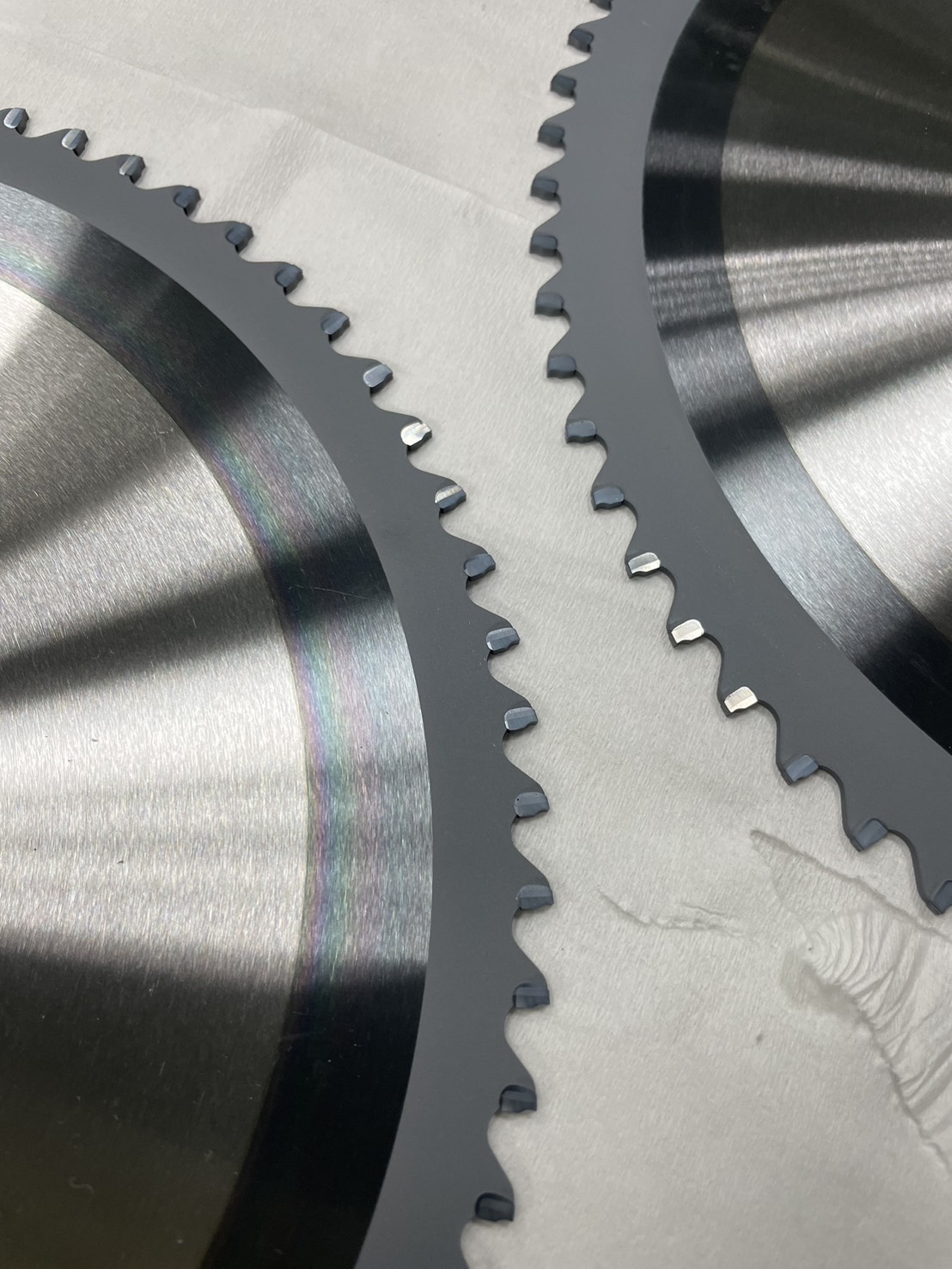
Common causes include excessive feed, unstable workpiece clamping, machine vibration, unsuitable tooth count, incorrect blade selection, or poor chip evacuation.
The blade should be evaluated together with the material, workpiece dimensions, machine condition, and operating parameters.
A blade may physically be able to cut more than one material, but that does not mean it will deliver optimum tool life, cut quality, and cost efficiency in every application.
Samurai Saw offers the SR-8, SR-8S, and SR-8P separately because solid carbon and alloy steel, SUS stainless steel, and pipe create different cutting requirements.
Consider blade inspection when burrs increase, cut quality deteriorates, cutting cycles become longer, machine load rises, or the blade becomes noticeably dull.
The goal is to address normal wear before it develops into severe tooth or blade-body damage. Learn more about Samurai Saw's professional saw blade resharpening services.
Not necessarily.
Industrial users should evaluate cost per cut, considering factors such as:
A higher-priced blade may still offer a lower overall cost if it delivers more stable cutting, longer usable life, and greater resharpening value.
Premature cold saw blade failure is rarely caused by a single factor.
The most effective approach is to evaluate blade selection, tooth count, cutting parameters, machine stability, workpiece clamping, lubrication, chip evacuation, and resharpening timing as one complete system.
For manufacturers performing repetitive cutting of carbon steel, alloy steel, stainless steel, or pipe, the real objective is not simply maximum blade life. It is to achieve:
Samurai Saw addresses different cutting requirements through the SR-8, SR-8S, and SR-8P product lines. In particular, the SR-8 combines Dragon Claw, Bevel Wing, and NANO cermet carbide-tip technology for solid carbon and alloy steel applications such as S45C and SCM415.
Combined with practical exposure to special steel, steel cutting, blade manufacturing, and professional resharpening, Samurai Saw brings a broader understanding of materials, cutting conditions, and tool life to industrial cold saw blade applications.
For manufacturers searching for a cold saw blade, cold saw blades for steel, or a steel cutting saw blade, the decision should not be based on initial price alone. Material type, workpiece geometry, machine condition, blade life, downtime, and long-term cost per cut all matter.
Provide your material grade, workpiece dimensions, current blade specifications, machine conditions, cutting parameters, and existing failure symptoms.
The Samurai Saw team can help evaluate a suitable cold saw blade solution for carbon steel, alloy steel, stainless steel, or pipe-cutting applications.
Contact Us