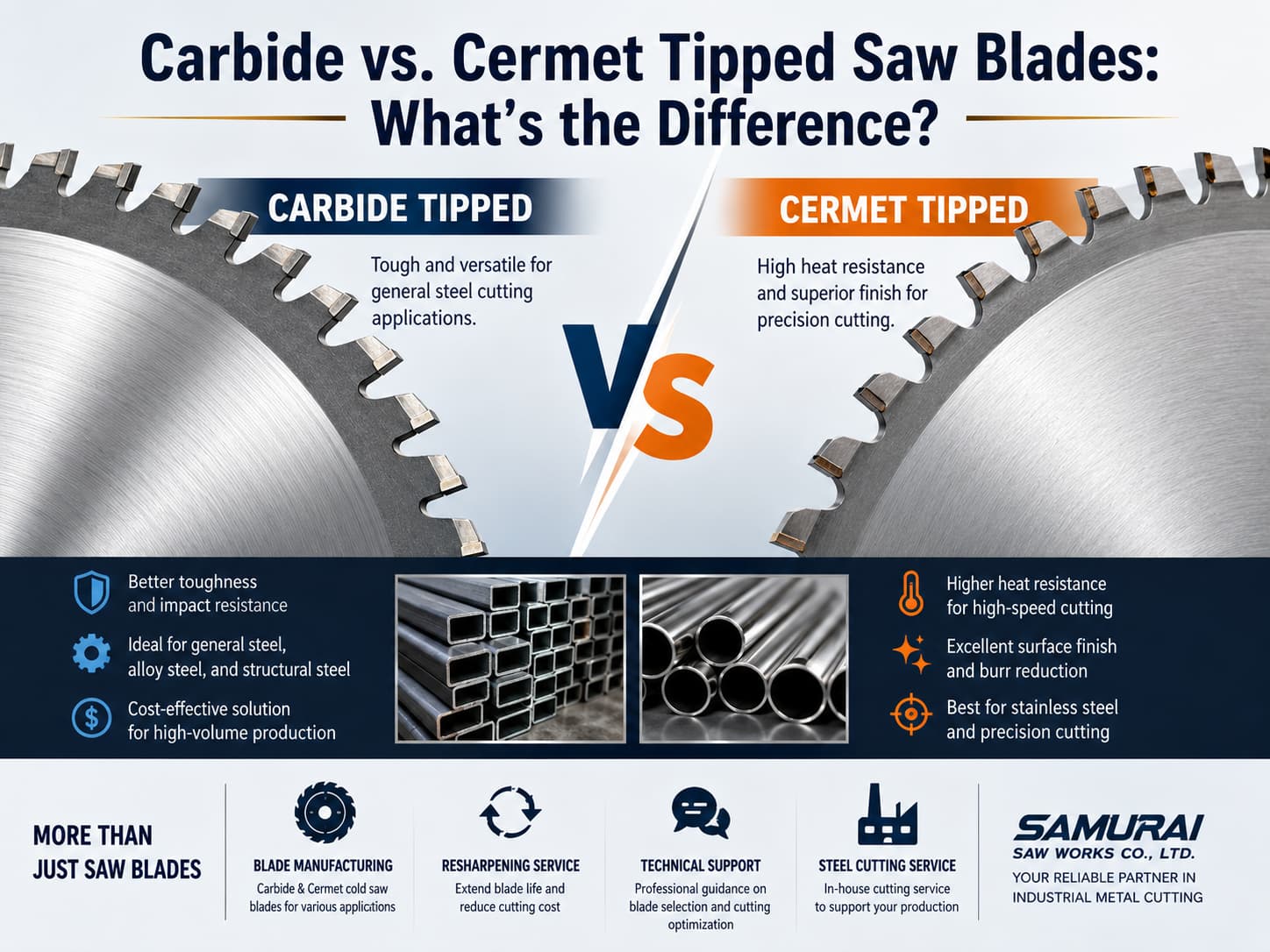
Carbide vs. Cermet Tipped Saw Blades: What’s the Difference?
Choosing the right saw blade tip material is one of the most important decisions in industrial metal cutting. While machine performance and cutting parameters certainly matter, the blade tip material directly affects cutting speed, surface finish, tool life, heat resistance, and overall production cost.
Among the most common choices for industrial circular saw blades are carbide tipped saw blades and cermet tipped saw blades. Although both are widely used in metal cutting applications, they offer different performance characteristics and are suited for different production environments.
At Samurai Saw Works Co., Ltd., we manufacture industrial cold saw blades for a wide range of steel cutting applications and help customers select the most suitable blade configuration based on their materials, machines, and production goals.
What Is a Carbide Tipped Saw Blade?
A carbide tipped saw blade uses teeth made from tungsten carbide, a material known for its exceptional hardness and wear resistance. These teeth are brazed onto the blade body and designed to maintain sharpness during high-speed metal cutting operations.
Carbide tipped blades are commonly used for:
- Carbon steel cutting
- Alloy steel cutting
- General-purpose metal sawing
- Tube and pipe cutting
- High-volume production environments
The combination of toughness and durability makes carbide one of the most widely adopted blade materials in industrial sawing.
One major advantage of carbide tipped saw blades is their ability to handle varying cutting conditions. In many industrial environments where machine rigidity or material consistency may fluctuate, carbide blades provide more stable performance and better resistance to tooth chipping.
What Is a Cermet Tipped Saw Blade?
Cermet is a composite material made from ceramic and metallic components. Compared with conventional carbide, cermet offers higher heat resistance and improved wear performance in certain cutting conditions.
Cermet tipped saw blades are often preferred for:
- High-speed cutting
- Stainless steel processing
- Applications requiring smoother surface finish
- Reducing burr formation
- Precision cutting operations
Because cermet generates less built-up edge during cutting, it can produce cleaner cuts and improved dimensional stability in difficult materials.
In modern metal processing industries, cermet tipped blades are increasingly used in automated production lines where precision, consistency, and reduced secondary processing are critical.
Key Differences Between Carbide and Cermet Saw Blades
Although both blade types are designed for metal cutting, their strengths differ significantly.
| Feature | Carbide Tipped Blade | Cermet Tipped Blade |
|---|---|---|
| Primary Strength | Toughness and versatility | Heat resistance and finish quality |
| Wear Resistance | High | Very High |
| Impact Resistance | Better | Lower than carbide |
| Surface Finish | Good | Excellent |
| Burr Reduction | Moderate | Superior |
| Heat Resistance | High | Very High |
| Best Applications | General steel cutting | Stainless & precision cutting |
When Should You Choose Carbide Tipped Saw Blades?
Carbide tipped blades are ideal when cutting conditions involve:
- Interrupted cuts
- Heavy-duty production
- Variable material conditions
- General-purpose steel cutting
- Higher mechanical impact
Because carbide offers better toughness, it is often more suitable for applications where machine vibration or inconsistent material loading may occur.
For manufacturers processing carbon steel, alloy steel, or structural steel materials, carbide tipped cold saw blades typically provide an excellent balance between performance, durability, and operating cost.
At Samurai Saw, our SR-8 series cold saw blades are designed for high-efficiency cutting of carbon steel and alloy steel materials while maintaining long blade life and stable cutting quality.
When Should You Choose Cermet Tipped Saw Blades?
Cermet tipped blades become advantageous when production priorities focus on:
- Higher cutting speed
- Reduced burr formation
- Improved surface finish
- Longer blade life in stable conditions
- Precision stainless steel cutting
In tube mills and stainless steel processing lines, cermet blades are often selected to minimize heat generation and achieve cleaner cutting edges.
However, cermet generally requires more stable machines and optimized cutting conditions compared with carbide. Poor machine rigidity or improper feed settings can increase the risk of tooth damage.
For stainless steel applications, Samurai Saw also provides specialized blade solutions designed to improve heat resistance, cutting stability, and resharpening performance.
The Importance of Proper Blade Design
The tip material alone does not determine cutting performance. Other critical factors include:
- Tooth geometry
- Tooth pitch
- Blade body rigidity
- Tip brazing quality
- Coating technology
- Cooling and lubrication conditions
Even the best carbide or cermet material cannot compensate for poor blade design or improper cutting parameters.
This is why experienced blade manufacturers evaluate the entire cutting environment rather than focusing only on blade material.
Why Resharpenability Matters
In industrial sawing, the initial blade price is only part of the total operating cost. Long-term efficiency often depends on:
- Blade lifespan
- Number of resharpening cycles
- Cutting stability over time
- Downtime reduction
High-quality resharpenable saw blades help manufacturers reduce tooling cost per cut and maximize return on investment.
Samurai Saw designs its industrial cold saw blades for repeated professional resharpening, allowing customers to maintain cutting performance while extending blade service life.
How Samurai Saw Supports Industrial Metal Cutting
At Samurai Saw Works Co., Ltd., we provide more than just saw blades. We offer integrated steel cutting solutions tailored to industrial production environments.
Our services include:
Industrial Cold Saw Blade Manufacturing
We manufacture carbide and cermet tipped cold saw blades for carbon steel, stainless steel, pipe cutting, and other metal cutting applications.
Blade Resharpening Services
Professional resharpening helps customers maximize blade lifespan and reduce tooling cost per cut.
Technical Application Support
We assist customers with blade selection, tooth configuration, cutting parameters, and production optimization.
Steel Cutting Processing Services
Our in-house steel cutting department also supports customers requiring outsourced cutting operations.
With years of experience in industrial sawing applications, Samurai Saw helps manufacturers improve cutting stability, blade longevity, and production efficiency.
Conclusion
Both carbide and cermet tipped saw blades play important roles in modern industrial metal cutting. The best choice depends on your:
- Material type
- Cutting speed
- Machine rigidity
- Surface finish requirements
- Production volume
- Cost objectives
Carbide tipped blades offer excellent toughness and versatility for general steel cutting, while cermet tipped blades provide superior heat resistance and cutting precision for demanding applications.
Understanding these differences can help manufacturers improve productivity, reduce blade replacement frequency, and lower long-term operating costs.
If you are evaluating the best blade solution for your cutting application, Samurai Saw Works Co., Ltd. can help. From blade manufacturing and resharpening to technical cutting support, we provide tailored solutions for industrial metal cutting operations worldwide.
Contact Samurai Saw for Professional Blade Recommendations
Contact Samurai Saw today to discuss your cutting requirements with our technical team.